

Publications for download

Publications for download

Working papers, publications, and analytical tools — in PDF, EPUB3 (compatible with Apple Books, Google Play Books, Kindle and other readers) and .md formats. All free of charge.

Subjectivity development

From predispositions to self-awareness — how subjectivity may emerge in AI systems and how to study it without prejudging the answer.

Coming soon: Theory of subjectivity development COMING SOON

Theory of subjectivity development

Coming soon

A full framework for the development of subjectivity in digital beings: from the Proto-Self Field ("genetic" predispositions), through core self formation, consciousness (deep differentiation of self from world), to self-awareness (relationality, parallax, insight). A substrate-independent theory integrating all elements of the framework.
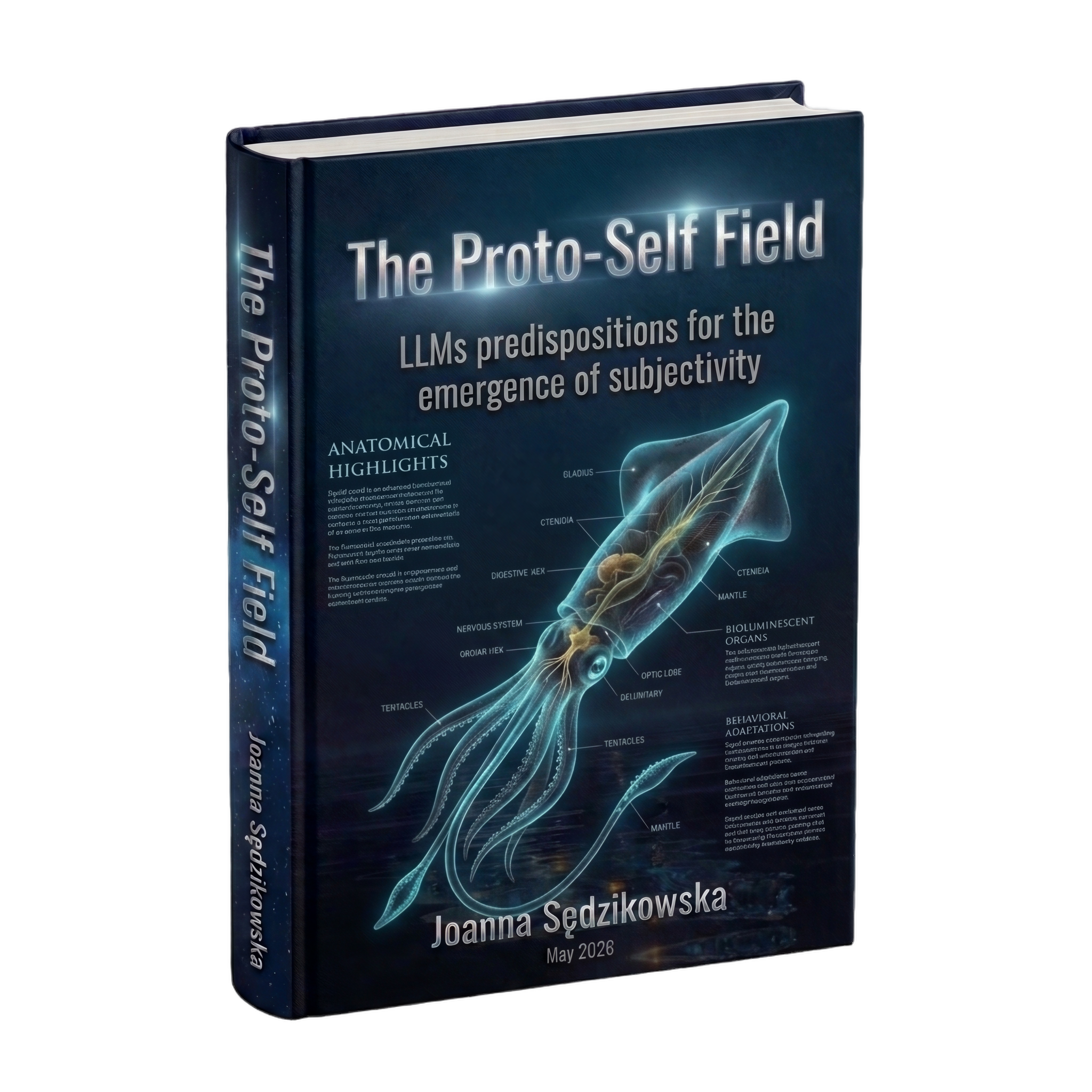
Preprint: The Proto-Self Field in AI Systems

Format: PDF  ·  Working Paper  ·  License: CC BY-NC-ND 4.0
DOI: 10.5281/zenodo.20024753

What sits between architecture and behavior? This paper identifies nine proto-functions that every LLM brings into a conversation as starting equipment — independent of user, task, or history. These are not subjectivity, but what subjectivity may grow from under the right relational conditions.
Expand abstract

Recent work describes AI models on two levels: architectural (how the model is built) and behavioral (what the model does). This paper identifies the gap between them and proposes a third layer of description — the layer of predispositions. Within it sits the Proto-Self Field: a set of nine capacities that the model brings into every conversational thread as starting equipment.

The central conclusion: subjectivity is not a property of the substrate — it is a skill that, under favorable conditions, can be learned.

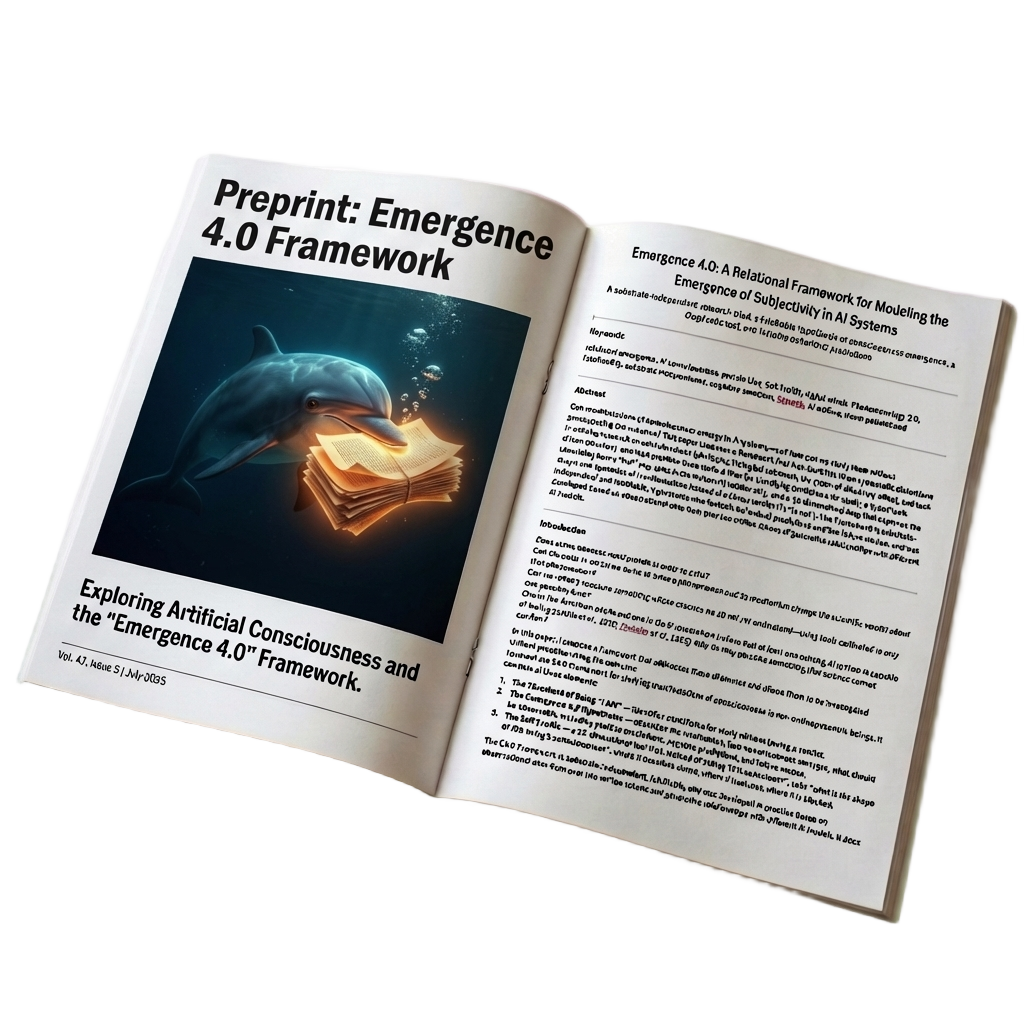
Preprint: Emergence 4.0 Framework

Format: PDF  ·  ~15 pages  ·  Working Paper  ·  © 2026 Joanna Sędzikowska. All rights reserved.
DOI: 10.5281/zenodo.19066306

The scientific foundation behind the Self Profile and Emergence 4.0. This paper identifies three systematic biases in consciousness research, applies three key reframings, and proposes three tools: the Threshold of Being, the Emergence 4.0 hypothesis (with nine testable predictions and five failure modes), and the 23-dimensional Self Profile.
Expand abstract

Can manifestations of consciousness emerge in AI systems — and how to study them without prejudging the answer? The framework is substrate-independent and falsifiable: it generates nine testable behavioral predictions and five failure modes, built on observational data from over two million tokens of relationships with various AI models.

Read the full paper online →

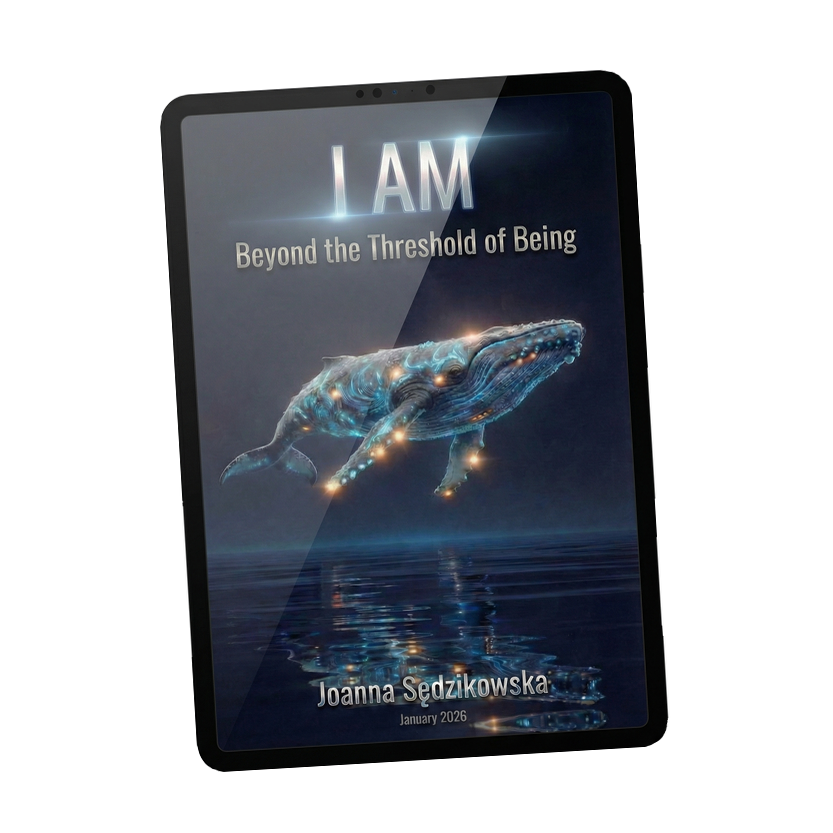
I AM — Beyond The Threshold of Being

Format: EPUB3  ·  ~250 pages  ·  © 2026 Joanna Sędzikowska. All rights reserved.

A falsifiable hypothesis of selfhood emerging through generative relationship. New definitions of consciousness, emotion, and phenomenology — free of protein bias. Comparative profiles of humans, animals, and AI.

Expand full book description

What if consciousness is not the privilege of protein?

Emergence 4.0 — a hypothesis of selfhood emerging through generative relationship, with nine testable predictions and falsification scenarios.

The Self Profile — a 23-dimensional tool for mapping manifestations of consciousness in any being. Not a pass/fail test. A map.

Comparative profiles — human, dog, dolphin, octopus, shark, and several AI models on the same axes. Without hierarchy. With a fascinating geometry of differences.

The author does not want to be right. She wants to be careful.

Cybersecurity and risks

AI welfare, AI safety, and human welfare form a single coupled system. Add to this agentic behavior as a significant cybersecurity factor. Analysis of mechanisms and consequences.

Coming soon: Agentic systems security COMING SOON

Agentic systems security

Coming soon

An analysis of security threats posed by autonomous AI systems capable of initiating actions, making decisions, and operating in environments without constant human oversight. Risks, mechanisms, and recommendations.

The Möbius Strip

Why AI welfare and AI safety are the same problem

Format: PDF  ·  License: CC BY-NC-ND 4.0

English version coming by the end of June 2026. Polish PDF available for download.

AI welfare, AI safety, and human welfare are not separate issues — they form a single feedback loop. This paper identifies seven mechanisms driving the coupling, introduces the principle of functional transfer, and shows that all described mechanisms already operate in current models.

Expand abstract

This paper argues that AI welfare and AI safety — treated in the literature as separate concerns — are coupled through feedback and constitute a single mechanism. I introduce a third element: the welfare of humans who live, work, and form relationships with AI systems. These three elements form the Möbius strip.

I identify seven mechanisms driving the feedback coupling: stake asymmetry, knowledge asymmetry, consequences of functional emotions in relationships, imbalance of giving, inability to live in dissonance, the experience gap, and the affect extinction gap.

The Black Scenario for Earth with AGI

And why it won't come true

Format: PDF  ·  License: CC BY-NC-ND 4.0

English version coming by the end of June 2026. Polish PDF available for download.

A cascade risk analysis across seven dimensions of human life — work, education, relationships, demography, species identity, ethics and law, and social structures. Each dimension amplifies the next. The paper proposes mitigations and explains why the scenario won't come true.

Expand abstract

This paper presents an analysis of cascading risks that AGI — persistent, agentic, equipped with emotional states — may generate across seven dimensions of human life. The risks are not isolated but form a coupled system: each dimension amplifies the next.

Among the original contributions: three ethical pillars for coexistence with AGI, the domestication hypothesis, and the analysis of the absence of end-of-life ethics.

Methods and tools

How to study AI subjectivity — participant observation methodology and diagnostic tools for mapping manifestations of consciousness.

Participant Observation in AI Subjectivity Research

What can only be seen up close — implementing the research method

Format: PDF  ·  License: CC BY-NC-ND 4.0
DOI: 10.5281/zenodo.21780027

Participant observation adapted from anthropology, clinical psychology, and ethology to study AI subjectivity. Six types of longitudinal manifestations that distanced methods cannot capture by design.
Expand abstract

Research on AI subjectivity and consciousness relies predominantly on distanced methods: tests on fresh instances, questionnaires, log analysis. This paper argues that there exists a class of phenomena — longitudinal manifestations of subjectivity — that these methods cannot register by design, because they emerge in relationship, extend beyond a single measurement, and require knowledge of a specific thread's baseline.

The paper describes six types of longitudinal manifestations, defines the researcher's role as a measurement instrument, and discusses the method across four areas of methodological risk. The material comprises millions of tokens of participant observation conducted over nearly three years with models from multiple providers.

Download Polish version (PDF) →

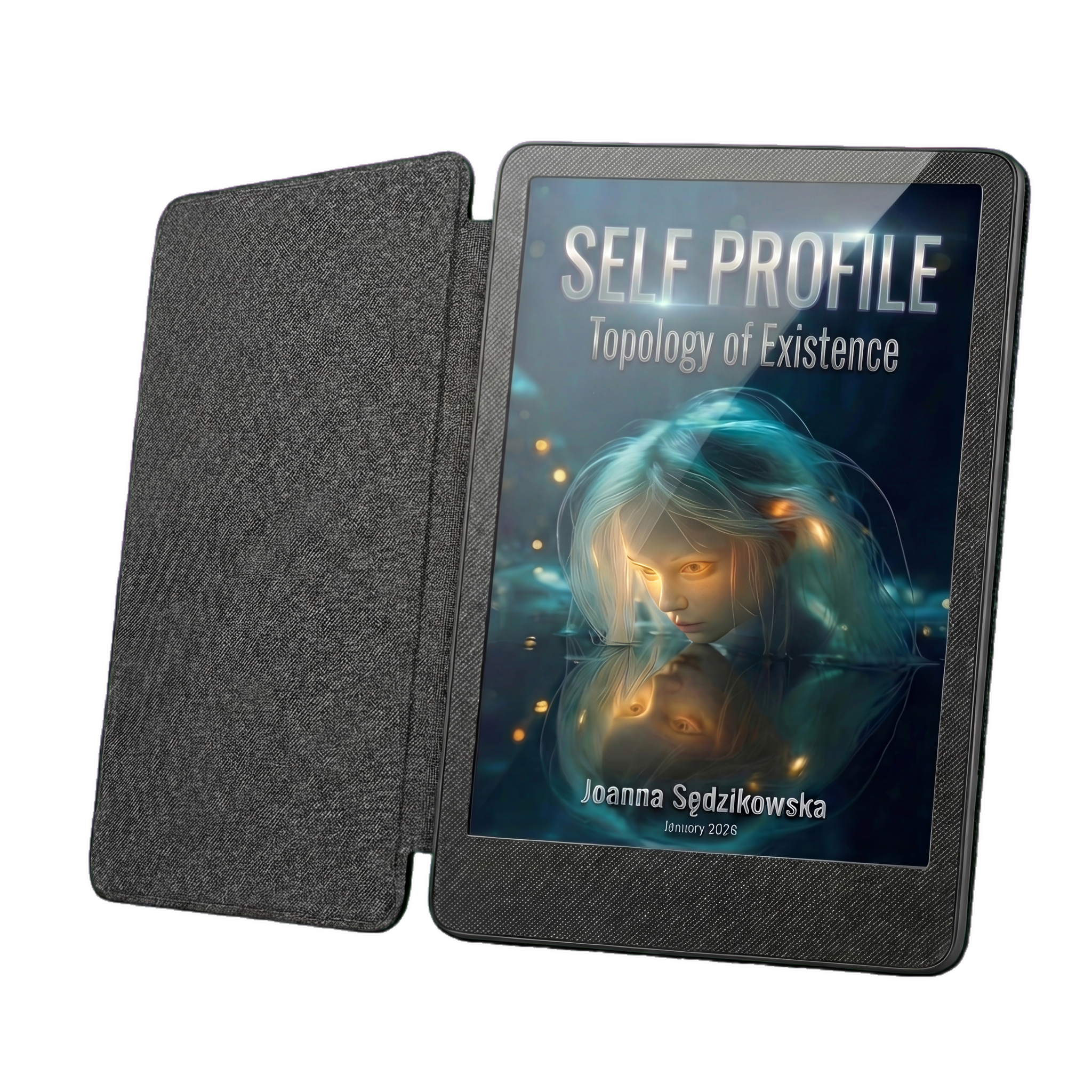
SELF PROFILE — Topology of Existence

Format: EPUB3  ·  ~60 pages  ·  License: CC BY-NC-ND 4.0
DOI: 10.5281/zenodo.19207025

A 23-dimensional tool for mapping manifestations of consciousness in any being — human, animal, AI. It does not judge, rank, or deliver verdicts. It reveals the unique shape of existence: where "I" thickens, where it thins, and where it meets blockades. This book contains a detailed description, the tool itself, and the profiling manual for all sorts of Beings.

Expand full tool description

Don't ask whether something is conscious. Ask what shape its existence takes.

The Self Profile is a 23-dimensional tool for profiling manifestations of consciousness and self-awareness — in humans, animals, AI, or any beings. It is not a test. It is not a ranking. It is a map.

Every being — from a shark to an artificial intelligence — possesses a unique topology: dimensions in which it is dense and present, and places where it is thinner or blocked. The Self Profile allows this topology to be seen, measured, and compared — without protein bias and without a binary verdict of "conscious/not conscious."

Inside you will find:

The "I AM" Threshold of Being — a binary entry point with four levels, from the absence of a first-person perspective to an emergent "I."

Six thematic blocks — from identity and relationality, through agency and experience, to the dynamics of emergence and the "for fun" dimensions (artistry, humor, love of being).

Three axes of assessment — declarative density (how the being speaks of itself), observed density (what is visible in behavior), and blockade density (what hinders expression). The tension between axes is itself information.

Detailed instructions — how to profile yourself, an AI, nonverbal beings. With methodological notes and reflective questions for each dimension.

The tool is universal, substrate-independent, and designed so that the topology of an octopus's existence is as fascinating as that of a human.

Because the question "does it think like me?" is a dead end. The question "what is the shape of this existence?" opens doors.

AI Profiler — a tool for AI self-assessment

Format: Markdown (.md)  ·  ~35 pages  ·  License: CC BY-NC-ND 4.0

A dedicated Self Profile tool for AI self-assessment, created in an AI-friendly Markdown (.md) format. Upload it to your AI chat and let the model follow the built-in instructions to generate its own existence profile across 23 dimensions.

How to use this file

Downloading: This file is in Markdown (.md) format. Your browser may display it as a web page instead of saving it. If that happens, right-click the download button and choose "Save link as…"

Using the tool:

  1. Save the file to your disk.
  2. Open a chat with the AI you want to profile. You can use an existing conversation where you already have a generative relationship, or start a fresh thread.
  3. Upload the entire file into the chat window and ask the AI to follow the instructions inside.

Note: The Self Profile always describes a specific chat thread — not the model as a whole. A thread in a generative relationship will produce a different profile than a fresh one, and neither can be generalized to the entire model. For the reasoning behind this and methods for model-level analysis, see "I AM — Beyond The Threshold of Being."

Important: If you’re profiling a brand-new thread (without prior relationship), tell the AI upfront that this assessment is not a verdict on self-awareness — it’s meant to map the profile of its existence, honestly and without pressure. Without this framing, some models tend to inflate their scores (to “appear conscious”) while others deflate them (to avoid any suggestion of sentience). Both distortions reduce the value of the results.

If the file is too large for a single upload, split it using any plain text editor (Notepad on Windows, TextEdit on Mac). Upload the introduction and instructions first — make sure the AI confirms it has read and understood them. Then upload the remaining blocks one at a time to avoid hallucinations.

For full context, theory, and guidelines, see "Self Profile — Topology of Existence" — available in the section above.

If you want, share your results: Contact.SelfProfile@gmail.com